
SSUP - Sanskriti O Samaj Unnayan Parishad
SSUP - Sanskriti O Samaj Unnayan Parishad
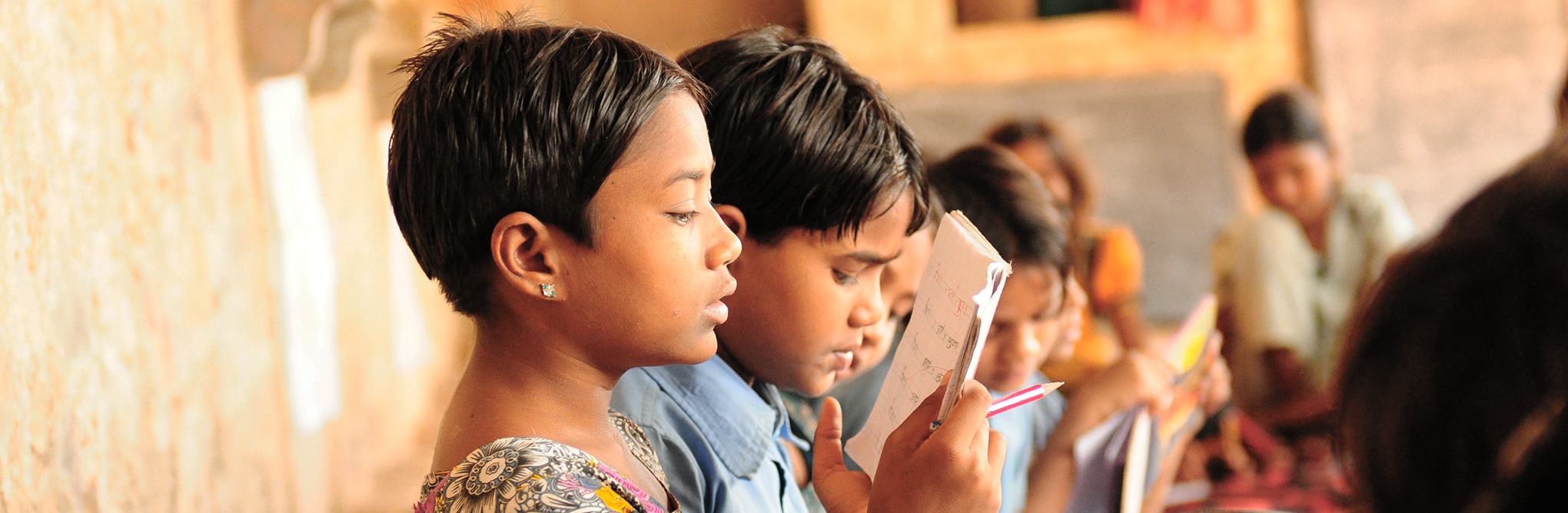
Project Brief: SSUP, founded in 1989, is based in Malda, about 350 km from Calcutta, in West Bengal. The organization lays emphasis on working with the community people so that they take up their own development projects.
Project Type: Non-Formal Educational Centers (description)
Primary Focus: creating resources (description)
Supporting Chapter Contact:
Silicon Valley
Project Type: Non-Formal Educational Centers (description)
Primary Focus: creating resources (description)
Secondary Focus: vocational training
Area: RuralSupporting Chapter Contact:
Silicon Valley
Status: CLOSED - ENDED
Project Steward: Saurabh Bagchi
Co-Steward: Ashish Chaddha
Project Partner(s): Shankar Mandal
Project Address: SSUP - Sanskriti O Samaj Unnayan Parishad
Sanskriti O Samaj Unnayan Parishad
Sarbamangala Pally (South), West Bengal 732101
Tel: 91-3512-267423 / 33-24185452
Stewarding Chapter: Silicon Valley
| 2003 | Silicon Valley | USD 2205 |
| 2002 | Silicon Valley | USD 2205 |
| 2002 | Seattle | USD 6150 |
| 2001 | Stanford | USD 1866 |
| 2001 | Silicon Valley | USD 913 |
| 2001 | Seattle | USD 6150 |
| 2000 | Seattle | USD 2500 |
| 2000 | Silicon Valley | USD 1825 |
| 1999 | Seattle | USD 2500 |
Total = $26314
With Asha's support SSUP is now running 17 Shishu Shiksha Kendras (Children Learning Centers) for Non-Formal Education for the last three years. There are about 25 children in each center. The schools are in blocks with very low literacy levels (31% for males and 16% for females) with a large population belonging to socially deprived classes. The funds are used for educational materials for the children (about 110 boys and 133 girls), training teachers from the villages themselves, holding cultural programs for the children and taking them to educational camps outside their villages. The criteria for student selection are that they have no other source of education and they come from a socially and economically backward or minority community. SSUP does not charge any fee from the students.
Aim
Non-Formal Education for primary school aged children as a component of the capacity building process of the community.
Description
The SSUP project in the Malda district today runs 17 non formal education (NFE) centers in different villages, spread out into two regions - Dalla, 50 km from Malda (11 centers) and Pirgunje, 17 km from Malda (6 centers). The Dalla project serves a predominantly tribal population (82% of the population). Each center caters to an average of 27 students at three different proficiency levels - one (most preliminary) through three (most advanced). The ages of the children lie between 6 and 14 years. The area in which the project is run is extremely backward with the villagers being mostly uneducated migrant laborers. The SSUP project provides an environment in which the children feel comfortable about attending school and learning, and then integrates them with mainstream education.
Project Objectives
i. To run Sishu Shikha Kendra (SSKs) with
i) 25 learners in each center,
ii) 70% attendance,
iii) 80% retention rate and
iv) 70% minimum learning level (MLL) achievement.
ii. To develop a curriculum through field testing, within the frame of minimum learning level (MLL).
iii. To develop a teaching learning strategy
a) to provide child centered, joyful learning climate in the center and
b) to inculcate / initiate a self learning process.
iv. To develop local specific instructional material for SSK learners (with
emphasis on tribal).
v. To suggest ways for better development in meta-linguistic area of learning.
vi. To train upgrade and equip village-level instructors to make them capable of running the SSKs for fulfilling the teacher s role as envisaged in the curriculum developed.
vii. To create a comprehensive awareness among the parents about total literacy and as well as social and economic rights.
viii. To ensure community participation in the short as well as long term so that they can follow up and finally take ownership of the project.
SSUP's long term plans
"Education is a continuous need of the community. However, this project aims at creating a model , primarily in two ways i.e. creating a demand for education from the backward community and at the same time developing a joyful teaching learning process to meet the local needs. Our project is in the initial phase only and it is difficult to clearly say when we can achieve the objectives fully. Instead of continuing this project with external support, what we intend to achieve and are also striving for is that either the government should take care of the childrens' education or alternatively the community should bear the cost of education (which we think is bit difficult in our target community). As we go along implementing the project, let us hope that government comes up with adequate educational facilities."