Asha Trust - Manigal
Asha Trust - Manigal


Project Brief: To promote education as a tool to change the marginal status of the gypsies. To use schooling as a tool to keep children in a safe environment and away from work. To break the barriers that prevent them from accessing the educational and other avai
Project Type: Other (description)
Primary Focus: to go to formal school (description)
Supporting Chapter Contact:
Chennai
Project Type: Other (description)
Primary Focus: to go to formal school (description)
Secondary Focus: remedial education
Area: TribalSupporting Chapter Contact:
Chennai
Status: CURRENT
Project Steward: Usha bhaskar
Project Partner(s): Usha bhaskar
Project Address: Asha Trust - Manigal
Asha Chennai First Floor, 85/2 Luz Avenue Mylapore, Chennai
Mylapore
Chennai, Tamil Nadu 600004
Tel: 9940027042
Stewarding Chapter: Chennai
Project Steward: Usha bhaskar
Project Partner(s): Usha bhaskar
Project Address: Asha Trust - Manigal
Asha Chennai First Floor, 85/2 Luz Avenue Mylapore, Chennai
Mylapore
Chennai, Tamil Nadu 600004
Tel: 9940027042
Stewarding Chapter: Chennai
| Sep 2026 | Chennai | USD 7086 |
| Apr 2026 | Chennai | USD 1086 |
| Sep 2025 | Chennai | USD 5739 |
| Apr 2025 | Chennai | USD 1545 |
| Sep 2024 | Chennai | USD 8076 |
| Apr 2024 | Chennai | USD 2500 |
| Aug 2023 | Chennai | USD 12673 |
| May 2023 | Chennai | USD 2313 |
| Aug 2022 | Bangalore | USD 7843 |
| Aug 2022 | Chennai | USD 4023 |
| Apr 2022 | Chennai | USD 1325 |
| Jul 2021 | Chennai | USD 6742 |
| Jun 2021 | Chennai | USD 482 |
| Sep 2020 | Chennai | USD 2250 |
| May 2020 | Chennai | USD 1137 |
| Sep 2019 | Chennai | USD 6080 |
| Jun 2018 | Chennai | USD 8321 |
| Aug 2017 | Chennai | USD 8836 |
| May 2017 | Chennai | INR 36500 |
| Oct 2016 | Chennai | USD 6066 |
| Oct 2015 | Chennai | USD 3119 |
| May 2015 | Chennai | INR 4500 |
| May 2015 | Chennai | USD 4776 |
| May 2014 | Chennai | USD 1722 |
| Nov 2013 | Chennai | USD 1294 |
Total = $146034
<p>
The gypsy community in south Chennai is a nomadic community of 60 and odd families. Garbage clearing, rag picking and bead selling are their main sources of livelihood. Hunting is also practised by some. Their mother tongue is Vaigiri, a language close to Gujarathi/Marathi. Their dress and customs are different from others around them. They live as a marginalized community, isolated from the rest of the society. However they have maintained a strong sense of group identity. </p>
<p>Movies are very popular and TVs are seldom turned off in their one room tenements. Gambling is another past time for the community. Because of their profession as rag pickers families tend to store recyclable waste they collect outside their houses. Boys and girls too are involved in collecting recyclable wastes and sorting it. Despite several interventions by the Govt and other NGOs no significant changes were evident in the life style of these families. They continue to remain as ragpickers absorbing their children into the profession as they go along. </p>
<p>In this scenario Project Manigal was started in the year 2004. It made a modest beginning with a Non formal Education program in the colony to create interest in schooling and to promote education as a valuable asset. Then it moved to the local primary school, coaxing a few gypsy children to stay and learn inside the school premises. Over the years some children not only stayed, but moved up the primary ladder. The children who broke the barriers and stepped into middle schools became role models for others. The gypsies are slowly starting to access educational opportunities available around them. Currently 30 and odd children are pursuing schooling in primary and middle/ high schools in the area. The project was run with contributions from interested individuals. </p>
<p>Gypsy children often travel with their families to far off places to participate in fairs and festivals which affects their continuity in school. Parents are not present in the mornings to send children to school which results in high absenteeism/late attendance. Learning through Tamil medium which is not their mother tongue is also a barrier. The learning levels of the gypsy children and the lessons they are expected to handle in class often do not match. In order to overcome these barriers the project staff visit various schools and the colony and give individualized attention and coaching in small sub groups. Such personal and intensive inputs, starting at the level of the child, rather than with the lessons help them to continue their education even after a break. </p>
<p>Education of gypsy children is a challenging process interconnected to social ,cultural and economic marginalization that confront the gypsies. Changing the educational profile of the community is a long and involved process. Nevertheless it is a valuable and important tool in their empowerment. </p>
The gypsy community in south Chennai is a nomadic community of 60 and odd families. Garbage clearing, rag picking and bead selling are their main sources of livelihood. Hunting is also practised by some. Their mother tongue is Vaigiri, a language close to Gujarathi/Marathi. Their dress and customs are different from others around them. They live as a marginalized community, isolated from the rest of the society. However they have maintained a strong sense of group identity. </p>
<p>Movies are very popular and TVs are seldom turned off in their one room tenements. Gambling is another past time for the community. Because of their profession as rag pickers families tend to store recyclable waste they collect outside their houses. Boys and girls too are involved in collecting recyclable wastes and sorting it. Despite several interventions by the Govt and other NGOs no significant changes were evident in the life style of these families. They continue to remain as ragpickers absorbing their children into the profession as they go along. </p>
<p>In this scenario Project Manigal was started in the year 2004. It made a modest beginning with a Non formal Education program in the colony to create interest in schooling and to promote education as a valuable asset. Then it moved to the local primary school, coaxing a few gypsy children to stay and learn inside the school premises. Over the years some children not only stayed, but moved up the primary ladder. The children who broke the barriers and stepped into middle schools became role models for others. The gypsies are slowly starting to access educational opportunities available around them. Currently 30 and odd children are pursuing schooling in primary and middle/ high schools in the area. The project was run with contributions from interested individuals. </p>
<p>Gypsy children often travel with their families to far off places to participate in fairs and festivals which affects their continuity in school. Parents are not present in the mornings to send children to school which results in high absenteeism/late attendance. Learning through Tamil medium which is not their mother tongue is also a barrier. The learning levels of the gypsy children and the lessons they are expected to handle in class often do not match. In order to overcome these barriers the project staff visit various schools and the colony and give individualized attention and coaching in small sub groups. Such personal and intensive inputs, starting at the level of the child, rather than with the lessons help them to continue their education even after a break. </p>
<p>Education of gypsy children is a challenging process interconnected to social ,cultural and economic marginalization that confront the gypsies. Changing the educational profile of the community is a long and involved process. Nevertheless it is a valuable and important tool in their empowerment. </p>
<ul><li>To promote education as a tool to change the marginal status of the gypsies.</li>
<li> To use schooling as a tool to keep children in a safe environment and away from work.</li>
<li>To break the barriers that prevent them from accessing the educational and other available services. Act as a link/mentor between school and the gypsy community for better access integration and adjustment. </li>
</ul>
<li> To use schooling as a tool to keep children in a safe environment and away from work.</li>
<li>To break the barriers that prevent them from accessing the educational and other available services. Act as a link/mentor between school and the gypsy community for better access integration and adjustment. </li>
</ul>
supporting Learning to gypsy children enrolled in educational institutions
Aug 2026 Manigal_Project_Metrics_Aug2026.pdf
Aug 2026 Manigal Utilization FY25-26.pdf
May 2026 Budget Proposal for 2026-27
May 2026 RightStart 2026
Feb 2026 RightStart 2026
Dec 2025 Asha Chennai Assessment Analysis
Sep 2025 Metrics 2025
Jul 2025 Site visit report
Jun 2025 AshaChennaiAuditReportFY24-25.pdf
Jun 2025 Budget Proposal for 2025-26
Dec 2024 -
Dec 2024 -
Sep 2024 Manigal_Metrics_2024.pdf
Aug 2024 Manigal_Metrics_2022.pdf
Jun 2024 Budget Proposal for 2024-25
Jun 2024 Report on RightStart 2024
Nov 2023 Oral Assessment Report - Nov 2023
Apr 2023 Manigal_Metrics_2022.pdf
Feb 2023 Evaluation of Manigal Project
Feb 2023 Site Visit - Kottur
Feb 2023 Site Visit - Indra Nagar
Jul 2022 Combined Proposal 22-23
Mar 2022 Site Visit Report
Aug 2020 Report of online classes
Jul 2020 Covid relief report
Jan 2020 _
Jan 2020 Site visit report of Shereen Broido
May 2019 Project Proposal 2019-2020
Jan 2019 dummy-link
Nov 2018 Site visit report - Nov 2018
May 2018 Project Proposal 2018-2019
May 2018 Report for year 2017-18
Jul 2017 Site visit report - July 2017
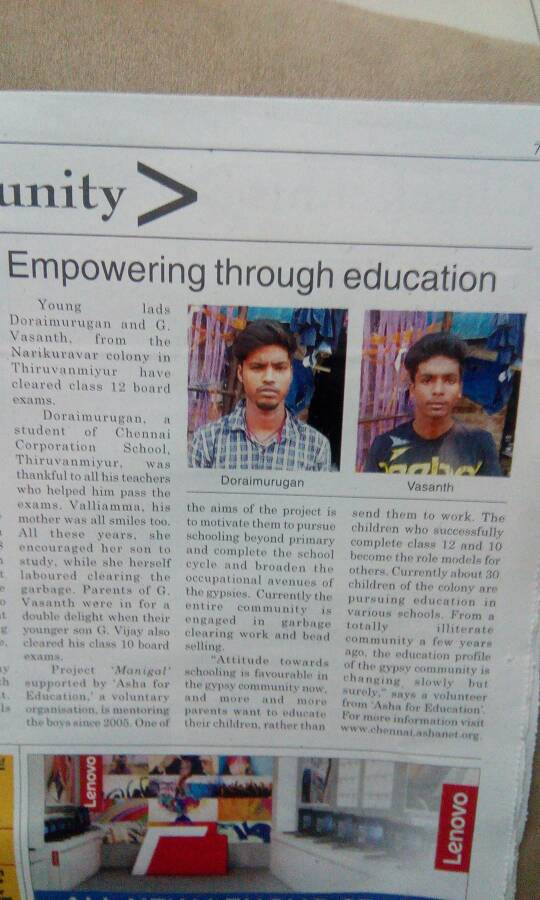
Jun 2017 Write up Adyar Times Newspaper
Jun 2017 Project Proposal 2017-2018
May 2017 Report for year 2016-17
May 2016 Consolidated report -2016
May 2016 Project Proposal 2016-2017
Jul 2015 Proposal and budget for 2015- 2016
Jun 2015 Site visit report 2015
May 2014 Project Proposal 2014-2015
May 2014 Site visit report 2014
Aug 2013 Approved Budget 2013-2014
Mar 2013 Site visit report 2012-13
Mar 2013 Project Proposal 2012-2013

Dec 1991 .